
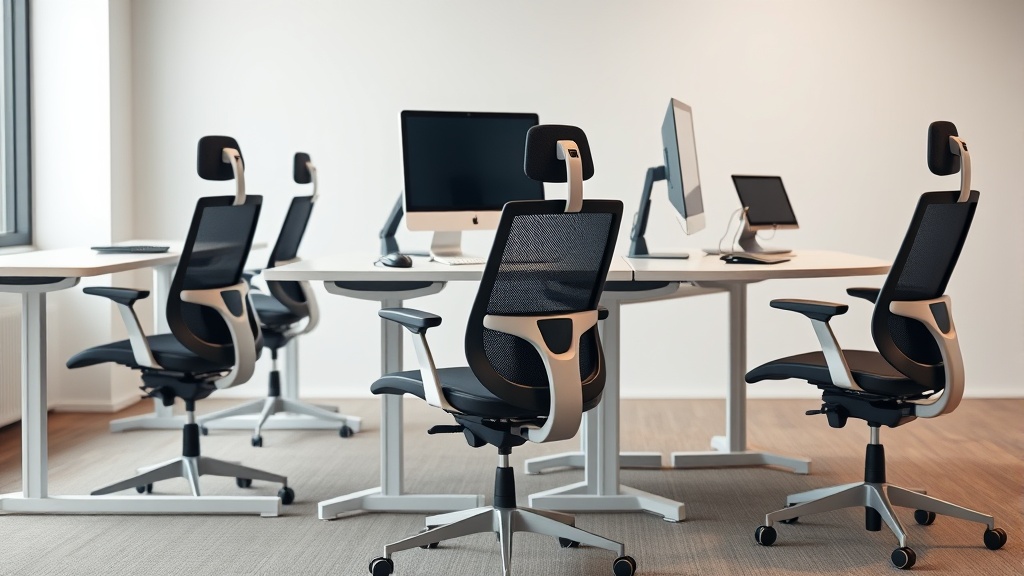
Ergonomic Office Chairs with Breathable Mesh for Comfort
If you spend long hours at a desk, you know how uncomfortable a poorly ventilated, unsupportive chair can become by mid-afternoon. Sweaty back, pressure points, and distracting discomfort can quickly sap your focus and productivity. Finding an ergonomic office chair with breathable mesh can help prevent overheating, improve posture, and maintain comfort for extended sitting sessions. But not all mesh chairs are created equal — choosing one that truly fits your body and work style requires attention to specific ergonomic measures and realistic expectations beyond marketing hype.
See also: Ergonomic Chair Cushions to Enhance Seating Comfort
What is a Breathable Mesh Office Chair?
A breathable mesh office chair features a backrest (and sometimes a seat) constructed from a woven synthetic or natural mesh fabric. Unlike solid plastic or fully upholstered chairs, mesh is designed to allow air and moisture to pass through, promoting ventilation around your back and reducing sweat build-up.
The mesh combines flexibility and support—molding around the contours of your back while returning to shape—aiming to provide dynamic lumbar support and pressure relief. Many mesh chairs include adjustable lumbar support inserts or frames to enhance this effect.
How Does Mesh Improve Ergonomic Comfort?
1. Better Air Circulation
Traditional padded chairs can trap heat and moisture, causing your back to become sweaty, irritated, or simply uncomfortable after hours of sitting. Mesh’s open weave encourages airflow, which helps regulate skin temperature and reduce perspiration.
2. Adaptive Support
Quality mesh balances flexibility and firmness, distributing your weight more evenly and conforming to your spine’s natural curve. This mitigates localized pressure points and encourages proper posture.
3. Lightweight and Responsive
Mesh chairs typically weigh less than padded counterparts and respond quickly to shifts in posture. This dynamic movement helps maintain blood flow and reduces stiffness.
When to Use a Breathable Mesh Chair
Breathable mesh office chairs are ideal if:
- You work long shifts (6-8+ hours daily) and want a chair that remains comfortable throughout.
- You sit in a warm or humid environment where ventilation matters.
- You suffer from back sweating or discomfort on traditional upholstered seats.
- Your workspace requires a lightweight, flexible chair that moves easily.
- You prefer a modern aesthetic that mesh chairs often deliver.
Key Ergonomic Features to Evaluate
Focus on specific ergonomic adjustments rather than solely mesh fabric when choosing a breathable mesh chair. The fabric alone won’t solve discomfort if adjustments or fit are poor.
| Feature | Description | Why It Matters | What to Look For |
|---|---|---|---|
| Seat Depth | Adjustable length of the seat pan | Proper thigh support, avoids pressure behind knees | At least 16-19 inches seat depth with 2”-4” adjustability |
| Lumbar Support | Adjustable lumbar brace or cushion | Maintains natural spine curvature | Height and depth adjustability over a 2-4 inch range |
| Armrest 4D Travel | Armrests adjustable in height, width, depth, pivot | Supports elbows without shoulder strain | Independent controls for vertical, horizontal, forward-backward, and rotation |
| Seat Cushioning | Firm but with pressure relief, often with mesh overlay or padding | Prevents numbness, distributes weight | Medium firmness; pressure-mapping data if available |
| Recline & Tilt Lock | Lockable recline and tilt tension adjustment | Allows position changes, reduces fatigue | Multiple angle lock settings with adjustable tension |
| Headrest (Optional) | Adjustable height and angle headrest | Supports neck during recline or breaks | Height and tilt adjustments to fit your upper spine |
How to Assess Real Comfort Versus Marketing Claims
Step 1: Check Adjustment Ranges, Not Just Presence
Some chair listings will say “adjustable” but might only offer minimal changes. For example, a lumbar support that moves only 1 inch up or down is unlikely to fit diverse body types effectively. Look for chairs that give at least 3-4 inches vertical and depth range for lumbar adjustments and 2-3 inches seat depth travel to accommodate your leg length.
Step 2: Pressure Mapping and Reviews Matter
Studies and third-party pressure-mapping tests can reveal areas that build up excess pressure in the seat or back. Chairs optimized for long-duration use tend to distribute weight well, with pressure evenly spread rather than concentrated on the ischial tuberosities (sit bones) or lower back.
While such data is rarely included directly, user reviews that mention comfort after 8+ hour days often hint at good ergonomics. Pay attention to mention of numbness, pins and needles, or back pain increasing with time as red flags.
Step 3: Consider Your Workspace Environment
If your office is climate controlled and cool, mesh’s high breathability may be less critical. Conversely, in warmer or poorly ventilated offices, mesh can be a game-changer. Also, consider whether your chair needs to roll easily on carpet or hard floors, as mobility affects your task efficiency and posture shifts.
Common Pitfalls When Choosing a Mesh Chair
- Over-prioritizing Mesh Material Over Ergonomics: A fancy mesh back won’t help if the chair doesn’t adjust properly to your body dimensions.
- Ignoring Seat Depth Fit: If the seat pan is too deep, it will press into the back of your knees, restricting circulation. Too shallow, and it won’t support your thighs sufficiently.
- Assuming Recline Is Optional: Static sitting is a culprit for stiffness. Having a tilt and recline mechanism that you actually use is vital.
- Armrests That Don’t Adjust Properly: Non-adjustable armrests can cause shoulder shrugging or elbow drop, leading to discomfort and RSI over time.
- Expecting Immediate Comfort: Mesh can take some breaking in. The mesh tension stabilizes over the first few weeks, and your body may need time to adjust to new postural supports.
Comparison Table: Breathable Mesh Chair vs Traditional Upholstered Chair
| Criteria | Breathable Mesh Chair | Traditional Upholstered Chair |
|---|---|---|
| Ventilation | Excellent airflow reduces sweating and heat buildup | Poor ventilation, can become hot and clammy |
| Support Adaptability | Flexible mesh conforms subtly, adjustable lumbar options | Generally firmer padding but less contouring |
| Weight | Usually lighter, easier to move or roll | Heavier due to padding and frame materials |
| Maintenance | Easier to clean, resists stains and odors | Can trap dirt in fabric; harder to clean |
| Durability | Mesh may sag over time if low quality; good models last | Padding may flatten; cushions require replacement |
| Office Climate Suitability | Best for warm/humid environments | More comfortable in cooler climates |
Frequently Asked Questions
Q: Will a mesh chair be comfortable for all-day use?
A: Yes, but only if it has proper ergonomic features like adjustable seat depth, lumbar support, and 4D armrests. Mesh alone doesn’t guarantee comfort — fit and adjustments matter most.
Q: How do I know if the lumbar support adjustment is sufficient?
A: Look for lumbar supports that can move both vertically and in depth (in and out) across at least a 2-4 inch range, so it can be positioned to the natural curve of your lumbar spine.
Q: Can a mesh chair prevent back pain?
A: A breathable mesh chair with good ergonomic fit can reduce overheating and encourage healthy posture, which helps prevent back pain. However, no chair cures back pain on its own—breaks, stretches, and overall posture habits also play a role.
Selecting an ergonomic office chair with breathable mesh requires balancing airflow with fit and adjustability. Prioritize seat depth, lumbar range, and multiaxis armrests alongside mesh quality for long-lasting day-to-day comfort. Taking time to test or carefully evaluate specs helps avoid trade-offs that only show up after an 8-hour workday.
Related reading
- 5. HON Ignition 2.0: the 300 dollar chair that beats chairs at three times
- Customizing Chairwise Chairs for Personalized Comfort and Support
- 4. Humanscale Freedom: who it works for and who it punishes
- 6. Why the Aeron is wrong for most people who bought it
- Choosing the Best Ergonomic Chair for Long Home Office Hours