
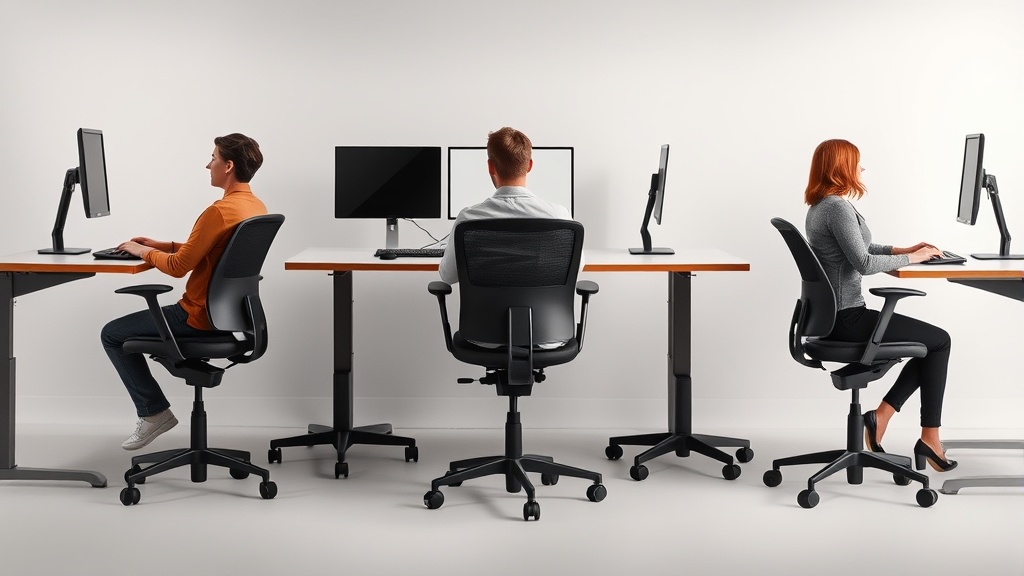
Body Types and Ergonomic Chairs: The 8 Reference Bodies Explained
If you’re a desk worker struggling with discomfort or fatigue after hours of sitting, it’s likely your chair isn’t properly matched to your body type. Understanding how your physical dimensions influence ergonomic seating can unlock better comfort and health during long workdays. This article demystifies the concept of the “8 reference bodies” — key anthropometric profiles ergonomists use to design and fit chairs — and explains practical ways to assess and select ergonomic chairs that suit your unique body.
See also: Customizing Chairwise Chairs for Personalized Comfort and Support
What Are the 8 Reference Bodies?
Ergonomics relies on population measurements called anthropometry to create “reference bodies” or body size categories that represent typical user segments. These reference bodies account for variations in height, weight, limb length, torso length, and other dimensions that directly affect how you fit into a chair.
The idea is not to pigeonhole you into a fixed category, but to provide a framework so designers and buyers can understand which chair adjustments matter most — from seat depth to lumbar support range to customizable armrest positions.
The eight common ergonomic body types are:
- Small-Stature Female: Shorter height, narrower frame, shorter torso and limbs.
- Average Female: Median height and anthropometric data for women.
- Tall Female: Above-average height, longer torso and leg length.
- Small-Stature Male: Slightly shorter than average male, smaller frame.
- Average Male: Median male body dimensions.
- Tall Male: Larger frame with longer torso and limbs.
- Large-Stature Male: Heavier body mass along with increased dimensions.
- Large-Stature Female: Heavier and/or broader female body characteristics.
These bodies each represent a collection of physical measurements used in chair design to ensure enough adjustability and support can accommodate as much of the user population as possible—roughly the 5th to 95th percentile range.
How Body Types Affect Ergonomic Chair Fit
Key Chair Dimensions to Match Your Body
-
Seat Depth (Thigh Support): Ideally, the seat pan should support most of your thighs without pressing hard against the back of your knees. Seat depth adjustability allows taller users with longer legs to move the seat pan forward, and shorter users to reduce depth avoiding circulation restrictions.
-
Lumbar Adjustability Range: Your lumbar spine differs in curvature and height between individuals. Chairs with adjustable lumbar height and firmness are essential to align with your natural spine curve. A lumbar position that’s too high or too low will cause poor lower-back support for your body size.
-
Armrest 4D Travel: Many ergonomic chairs offer armrests that adjust in height, depth, width, and pivot angles. This is crucial because arm length and shoulder width vary widely, especially between body types. Proper armrest positioning reduces shoulder and neck strain during keyboard or mouse use.
-
Backrest Height and Recline: Taller users often need higher backrests that extend adequately to support upper back and shoulders. Reclining and locking mechanisms should allow multiple ergonomic postures for long durations of sitting.
Pressure Mapping and Comfort
One scientifically backed way to validate a chair’s fit for your body type is through pressure mapping—using sensors to measure contact pressure distribution between your body and the chair’s surfaces under load. Ideal pressure is evenly spread on the seat and lumbar areas, avoiding high-pressure points that cause discomfort and numbness.
Pressure mapping data often justifies seat pan depth options, lumbar pads, and cushion firmness tailored to different body types. For example, a small-stature female’s pressure map will show high pressure at the back of the knees if the seat is too deep, while a tall male will show pressure concentrated on the ischial tuberosities if the seat pan is too shallow.
When To Focus on Your Body Type in Chair Selection
-
If you spend 6+ hours sitting daily: Subtle mismatches in chair fit compound discomfort. Larger variety in body type demands higher adjustability.
-
If you fall outside average height/weight ranges: Most office chairs default to average body dimensions, making customizable features and modular adjustments key.
-
If you have chronic pain or pressure sensitivity: Body-type appropriate lumbar support and seat dimensions prevent secondary muscular and skeletal issues.
-
If you share chairs or work in hot-desking environments: Chairs with wide non-fixed adjustment ranges will support a broader variety of body types comfortably.
Common Misconceptions and Pitfalls When Matching Chairs to Body Types
-
“One size fits all” marketing: Chair brands often highlight “ergonomic design” without adequate adjustability, unsuitable for many body types. Lengthy hours reveal real fit issues, not initial comfort impressions.
-
Ignoring Seat Depth: Many buyers focus only on height adjustment, neglecting seat depth, which is crucial to thigh support and blood flow.
-
Overlooking Lumbar Position Range: Fixed or minimally adjustable lumbar support can strain individuals with smaller or taller torsos.
-
Armrest ‘Adjustability’ vs. Useful Adjustability: Some chairs offer armrests that technically move but lack the range needed for 4D customization (height, depth, width, pivot) essential for diverse body types.
-
Assuming Cushion Firmness is Universal: Heavier or large-stature bodies require denser foam cushions to avoid bottoming out, while smaller users may prefer softer padding.
Comparison Table: Chair Features vs. Body Type Needs
| Chair Feature | Small-Stature Female | Average Male | Tall Male | Large-Stature Male |
|---|---|---|---|---|
| Seat Depth Range (cm) | 38 - 43 | 40 - 45 | 44 - 50 | 42 - 48 |
| Lumbar Height Adjustability (cm) | 16 - 22 | 18 - 24 | 20 - 26 | 18 - 24 |
| Armrest 4D Adjustability | Essential | Essential | Essential | Essential |
| Seat Cushion Firmness | Medium-soft | Medium | Medium-firm | Firm |
| Backrest Height (cm) | 50 - 55 | 55 - 60 | 60 - 65 | 55 - 65 |
| Weight Capacity (kg) | 100 | 120 | 120 | 140+ |
Note: These ranges are approximate, based on ergonomic anthropometric data.
How to Evaluate Your Body Type for Chair Buying
-
Measure Your Key Dimensions: Height, hip width, thigh length (back of pelvis to knee), torso length (seat to shoulders), and arm length. This provides objective data to compare against chair specifications.
-
Check Manufacturer Specifications: Look for chairs that provide detailed ranges for seat depth adjustment, lumbar support height, and armrest travel. Often, product manuals or spec sheets list these details.
-
Test Before Buying When Possible: Sitting in the chair for at least 15-20 minutes simulates real-world conditions. Pay attention to thigh support, lumbar fit, and armrest comfort.
-
Use Pressure Mapping Tools or Apps if Available: Some ergonomic consultants or high-end retailers provide pressure mapping services to tailor recommendations.
-
Consider Aftermarket Adjustments: If a chair nearly fits your body type but misses one dimension, consider lumbar pillows, seat cushions, or armrest extenders as modifiable solutions.
Conclusion
Selecting an ergonomic chair based on the 8 reference bodies framework is a practical approach to avoid misleading hype and identify real, measured fit. The pillars of a good match lie in thoughtful adjustability of seat depth, lumbar support height and firmness, and fully adjustable armrests, all customized for your particular body dimensions and pressure distribution needs. The more tailored your chair is to your body type, the more likely you are to remain comfortable, pain-free, and productive through long work hours at your desk.
Frequently Asked Questions
Q: Why is seat depth adjustability so important for different body types?
A: Proper seat depth supports your thighs without pressing behind your knees. Shorter people need shallower seats to prevent circulation issues, while taller users need deeper seats for full thigh support.
Q: Can I use one chair if my body weight fluctuates or I share desks?
A: Chairs with broad adjustment ranges, especially in seat height, lumbar support, and armrests, can accommodate multiple users or weight changes, improving comfort universally.
Q: How do I know if the lumbar support height fits me?
A: Measure from your seat to the bottom of your rib cage or the curve in your lower back. Check chair lumbar adjustability specs to ensure the pad aligns with your natural lumbar curve.
Related reading
- 44. Why most chair reviews fail tall, short, and pregnant users
- 1. Herman Miller Aeron size B vs Steelcase Leap v2 after 90 days in real bodies
- Ergonomic Chair Showdown: Herman Miller Aeron vs. Steelcase Leap vs. Budget Alternatives
- Herman Miller Aeron vs. Steelcase Leap: Which $1,000+ Chair Actually Fits Your Body?
- 7. The best budget ergonomic chair under 250 dollars across six body types
Our picks worth a closer look
- 750lbs Big and Tall Office Chair with Wide Thick Seat Cushion,Ergonomic Mesh OffCheck on Amazon → — see current price and specs.
- NOUHAUS +Posture Ergonomic Rolling Office ChairCheck on Amazon → — see current price and specs.
- Autonomous ErgoChair Pro Ergonomic Office ChairCheck on Amazon → — see current price and specs.
- Big and Tall Office Desk Chair 500lbs, Ergonomic Heavy Duty Mesh Desk Chair, ExeCheck on Amazon → — see current price and specs.
- Ergonomic Office Chair, High Back Desk Chair with Flip-up Arms, 300 LBS Mesh ComCheck on Amazon → — see current price and specs.