
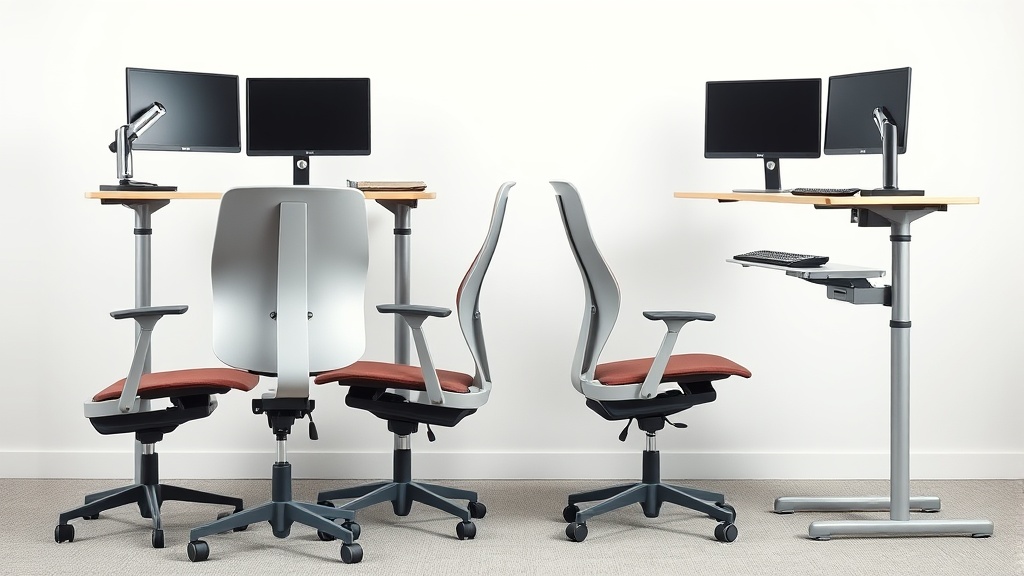
Many desk workers experience discomfort or fatigue in their lower back, legs, and feet during extended hours at their home office setup. The problem often stems from improper leg and foot positioning, which can lead to poor circulation, posture issues, and cumulative strain. While ergonomic chairs and desks get much of the attention, the humble footrest plays a crucial yet underrated role in overall comfort and musculoskeletal health when working long hours.
What is a Footrest and Why Does It Matter?
A footrest is a platform—either adjustable or fixed—on which you place your feet while sitting. In an ergonomic context, footrests help position your lower limbs and pelvis in a way that supports neutral spinal alignment and improves circulation.
If your feet don’t rest flat on the floor, or if your chair height doesn’t allow your knees to sit at roughly a 90-degree angle, unsupported feet can hang or dangle. This leads to pressure build-up beneath the thighs, reduced blood flow, and shifts in pelvis position that translate upward to strain your lumbar spine over time.
For shorter individuals or those with height-adjustable desks that raise the work surface significantly, footrests fill the gap between the floor and feet. They’re also useful for anyone wanting to change posture throughout the workday by elevating or angling their feet.
See also: Chairwise Chairs with Lumbar Support for Improved Posture
How Footrests Work in an Ergonomic Setup
The key to effective footrest use is measured fit and adjustability. Here’s what to consider in the context of long-term comfort during 8+ hour workdays:
-
Seat Depth and Leg Room: If your chair seat is too deep for your thigh length, the front edge can press into the back of your knees, causing discomfort and nerve compression. A footrest can adjust leg positioning by enabling you to slide forward and maintain clearance behind the knees.
-
Knee and Hip Angle: Ergonomically, your knees should be at or slightly below hip height with thighs roughly parallel to the floor. Feet flat and supported prevent the pelvis from tilting forward or backward, which affects lumbar curvature. A footrest helps maintain this alignment especially if your chair height needs to accommodate desk height.
-
Pressure-Mapping and Circulation: Pressure on the underside of the thighs, often from a chair seat that’s too high relative to your height, reduces circulation leading to leg and foot numbness or swelling. Elevating your feet on a footrest can redistribute weight and reduce pressure points.
-
Dynamic Adjustment: The best footrests offer adjustable height and tilt (e.g., rocking or angled) to promote subtle shifts in posture and muscle activation over long hours.
Key Features to Look for in a Footrest
| Feature | Purpose | Impact on Comfort | Suitable User Scenarios |
|---|---|---|---|
| Height Adjustability | Matches your leg length and the chair/desk height relationship | Proper knee angles, better circulation | Users under ~5’6” or those using height-adjustable desks |
| Angled/Tilt Surface | Enables foot rocking and shifting weight distribution | Reduces static load, activates leg muscles | Workers sitting 8+ hours looking to avoid fatigue |
| Non-Slip Surface | Prevents foot slipping during adjustment or movement | Maintains consistent foot position | Anyone moving feet throughout work sessions |
| Sturdy Build/Weight Limit | Provides stable support without tipping or wobbling | Enhanced confidence; safe posture | All users, especially those who fidget or move frequently |
| Portability or Size | Easy to move away or tuck under the desk when not in use | Adaptable for multi-user or multi-space setups | Shared home offices or multi-use spaces |
When Should You Consider Using a Footrest?
A footrest is especially beneficial for:
-
Shorter Individuals: Those whose feet don’t quite reach the floor comfortably when seated at a standard desk and chair setup.
-
Users with Fixed Desk Heights: If your desk is not adjustable, and raising your chair causes your feet to dangle.
-
Reducing Discomfort From Sitting Long Hours: Individuals developing leg heaviness, numbness, or mild swelling after prolonged sitting.
-
Posture Correction: When you notice slouching caused by trying to reach the floor with dangling feet or when lower back aches result from pelvic tilt.
-
Encouraging Movement: Adjustable footrests with rocking capability encourage periodic small movements which counteract the negative effects of static sitting.
Common Pitfalls and How to Avoid Them
Using a footrest does not guarantee improved comfort unless appropriately integrated into your ergonomic setup. Watch out for:
-
Incorrect Height Setting: A footrest set too high can cause your hips to elevate above your knees, increasing pressure on your thighs and shifting your pelvis forward uncomfortably. Too low, and your feet slip off or fail to provide support.
-
Non-Adjustable Footrests for Variable Tasks: If your sitting posture or desk height changes during the day, a static footrest won’t always support you properly. Consider height and tilt adjustability.
-
Ignoring Chair Fit: Footrests work best in combination with an ergonomically suited chair that offers sufficient seat depth, lumbar support adjustability, and armrests with 4D adjustability, so you maintain a comprehensive posture system.
-
Lack of Movement: A footrest can encourage movement, but some people stay in static postures. Use the footrest to facilitate active sitting: gently rock or shift feet every 15-30 minutes.
-
Overemphasis on Footrests Alone: Footrests support leg and pelvis position but cannot compensate for poor desk height, screen placement, or chair ergonomics.
Footrest vs No Footrest: A Comparison Matrix
| Aspect | Footrest | No Footrest |
|---|---|---|
| Leg Support | Provides firm, adjustable support, improving posture | Feet may hang, creating pressure and poor circulation |
| Posture | Helps maintain neutral pelvis and lumbar curve | Increased risk of pelvic tilt and lower back strain |
| Circulation | Enhances blood flow, reduces numbness or swelling | Risk of discomfort and leg fatigue over long sitting |
| Movement Encouragement | Rocking or tilting footrests encourage muscle activation | Static feet and legs can increase stiffness |
| Suitability | Especially useful for shorter users and fixed desk setups | Works only if feet reach floor comfortably |
| Setup Complexity | Needs adjustment and pairing with chair/desk height | Simple, but potentially at cost of comfort |
How to Incorporate a Footrest into Your Existing Setup: Step-by-Step
-
Assess Your Current Sitting Position: Check if your feet fully reach the floor with knees roughly at 90 degrees and hips slightly above your knees.
-
Measure Your Leg Dimensions: Seat depth, calf length, and thigh height inform the ideal footrest height and angle settings.
-
Choose a Footrest with Adjustable Height and Tilt: This flexibility lets you customize fit, avoiding one-size-fits-all discomfort.
-
Set Your Chair and Desk Heights First: Footrests work best as part of an integrated setup—adjust chair height for armrest and lumbar support, then fine-tune using the footrest.
-
Place the Footrest Close Enough: Your feet should rest flat on the surface without needing to stretch or curl toes under.
-
Adopt Active Sitting Habits: Rock your feet gently, change angles intermittently, and avoid tensing muscles.
-
Monitor For Discomfort and Adjust: If you feel pressure behind the knees or your hips feel elevated beyond comfort, lower or raise the footrest accordingly.
-
Combine With Other Ergonomic Elements: A lumbar-adjustable chair, 4D armrests, and proper monitor height complete your ergonomic workstation for extended comfort.
Frequently Asked Questions
Q: Can a footrest help if my chair already has a footring?
A: A footring helps but may not offer precise ergonomic positioning or adjustable tilt. Dedicated footrests often provide better support, especially with adjustability for height and angle.
Q: Is it okay to have my feet dangling for short periods?
A: Occasionally dangling is fine, but for prolonged sitting (4+ hours), feet should be supported to avoid circulation issues and maintain good posture.
Q: Should I use a stationary or rocking footrest?
A: Rocking footrests encourage subtle movement, which reduces fatigue. If you tend to sit statically for long hours, rocking types are generally beneficial.
Using a footrest is a deceptively simple yet effective way to enhance ergonomic home office comfort, especially when paired with a thoughtfully adjusted chair and desk. By understanding how measured fit and pressure distribution affect your posture and lower limb health, you can make smarter decisions that feel good throughout a full 8-hour workday.
Related reading
- Standing Desk Height Adjustment: Finding Your Ideal Position
- Tips for Maintaining Good Posture While Working from Home
- Choosing the Best Ergonomic Chair for Long Home Office Hours
- How to Set Up a Home Office for Back Pain Prevention
- Chairwise Chairs with Lumbar Support for Improved Posture
Our picks worth a closer look
- 750lbs Big and Tall Office Chair with Wide Thick Seat Cushion,Ergonomic Mesh OffCheck on Amazon → — see current price and specs.
- Autonomous ErgoChair Pro Ergonomic Office ChairCheck on Amazon → — see current price and specs.
- Big and Tall Office Desk Chair 500lbs, Ergonomic Heavy Duty Mesh Desk Chair, ExeCheck on Amazon → — see current price and specs.
- Ergonomic Office Chair, High Back Desk Chair with Flip-up Arms, 300 LBS Mesh ComCheck on Amazon → — see current price and specs.
- Massage Office Chair with Foot Rest,6 Points Vibration&Heat Executive Office ChaCheck on Amazon → — see current price and specs.