Standing Desks as a Solution to Improve Circulation at Work

By Nate Frost · Senior Editor
Published May 12, 2026 · Last reviewed May 12, 2026
Standing Desks as a Solution to Improve Circulation at Work
If you spend eight hours or more a day seated at a desk, you know the discomfort and potential health issues that come with prolonged sitting: stiff legs, swollen ankles, and that heavy feeling in your lower back. Poor circulation is a common culprit—when you’re seated too long, blood flow slows, leading to fatigue, discomfort, and even increased risk of chronic conditions. Switching to a standing desk can help, but not all standing desks are created equal, and standing alone isn’t a magic fix. Understanding how standing desks impact circulation, what features to look for, and how to use them realistically can make a significant difference in your daily comfort and long-term health.
What Is a Standing Desk and How Does It Impact Circulation?
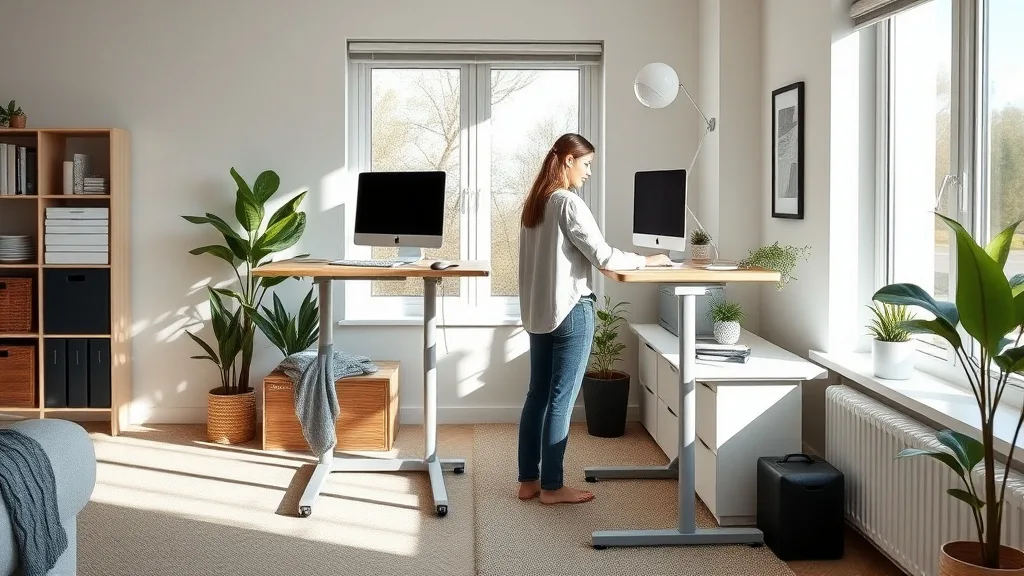
A standing desk is a workstation that allows you to work while standing up, either exclusively or alternating between sitting and standing with an adjustable mechanism. Standing desks vary widely—from fixed-height models to sophisticated electric ones that adjust at the push of a button.
How standing helps circulation:
- Engages leg muscles: Standing naturally activates small muscles in your calves and thighs that pump blood back to your heart, which sitting can’t do as effectively.
- Reduces venous pooling: When seated, blood can pool in the lower limbs, leading to swelling or numbness. Standing cuts down on this by encouraging blood flow.
- Improves overall movement: Standing makes it easier to shift weight, stretch, or walk briefly, all of which benefit circulation.
However, standing isn’t a perfect or complete solution. Without proper setup and habits, standing too long can also cause discomfort, leading to fatigue, pressure points on your feet, and even circulation issues like varicose veins.
See also: Standing Desks and Their Role in Combating Sedentary Lifestyle
How Standing Desks Work to Improve Circulation
Standing desks improve circulation primarily by breaking up long periods of sitting. This is important because:
- Muscular contractions: When you stand, your leg muscles contract more frequently, aiding the “muscle pump” that moves blood against gravity.
- Encouragement of micro-movements: People naturally shift their weight, rock on their heels, or take small steps, all of which stimulate circulation.
- Reduced pressure on veins: Sitting tightens hip and knee angles, which can compress blood vessels; standing opens these angles, allowing more natural blood flow.
An adjustable standing desk lets you shift between sitting and standing, so you don’t fatigue from standing continuously or lose the benefits of varying posture.
When to Use Standing Desks
To truly harness the circulation benefits of a standing desk, it’s about timing and gradual increases:
- Avoid all-day standing: Start by standing for short periods—15 to 30 minutes every hour—and adjust how long you stand based on your comfort and energy levels.
- Alternate actively: Use sit-stand desks to alternate between sitting and standing throughout the day to reduce fatigue and pressure points.
- Integrate with movement: Take breaks to stretch, walk, or do calf raises to complement standing.
- Customize to your body: Adjust desk height, monitor position, and work tools so your posture supports circulation and comfort (see below).
Key Ergonomic Features to Support Circulation at Standing Desks
Not all standing desks equally benefit circulation. Certain ergonomic factors ensure you’re truly getting the intended benefits over a typical sitting desk:
| Feature | What It Does | Impact on Circulation | Realistic Usage Tips |
|---|---|---|---|
| Height Adjustability Range | Allows desk to adjust to optimal standing and sitting height | Keeps wrists, elbows, and shoulders aligned, reduces strain that limits movement | Make sure desk height adjusts to your standing elbow height (around 90° bend) and sitting posture |
| Anti-Fatigue Mat Compatibility | Provides cushioning to reduce foot fatigue while standing | Encourages longer standing sessions without discomfort | Invest in a quality mat to avoid foot and leg pain |
| Footrest or Foot Rail | Gives you a place to rest one foot, shifting weight | Promotes movement and reduces swelling in legs | Shift weight regularly to activate calf pumps |
| Desk Surface Size and Depth | Spacious enough for monitor, keyboard, and accessories | Allows comfortable arm positioning preventing static posture | Keep frequently used items within easy reach to avoid leaning or twisting |
| Ease of Adjustment (e.g., electric vs manual) | Quick height changes promote regular sit-stand transitions | Enables frequent posture changes, keeps blood flowing | Set reminders to adjust desk every 30-60 mins |
Choosing a standing desk with these features can make the difference between standing comfortably for 30 minutes versus feeling pain and giving up.
Common Pitfalls When Using Standing Desks to Improve Circulation
Standing desks aren’t a cure-all, and recognizing common mistakes helps prevent new problems:
- Standing too long without breaks: Prolonged standing can cause foot, knee, and lower back pain or even impair circulation. Plan transitions and micro-movements.
- Poor fit and posture: If the desk height isn’t adjusted properly, you might hunch forward or overreach, straining your shoulders and neck.
- Ignoring footwear and flooring: Hard floors or unsupportive shoes increase foot pressure and fatigue. Use cushioned mats and supportive shoes.
- Lack of movement: Standing still for long periods isn’t much better than sitting; active movement is essential.
- Neglecting chair ergonomics: Don’t ditch your ergonomic chair. Use the sit-stand routine to balance sitting comfort with standing benefits.
How to Transition to Using a Standing Desk Effectively
Here’s a practical step-by-step for integrating a standing desk into your work day to best support circulation:
- Measure and Set Proper Desk Height: Standing desk height should align with your standing elbow height (roughly 90° bend). Your monitor top line should be near eye level to avoid neck strain.
- Start Slow: Begin by standing 15 minutes every hour, then gradually increase standing duration as you become comfortable.
- Use an Anti-Fatigue Mat: This reduces foot pressure and discomfort enabling longer standing sessions.
- Wear Supportive Shoes: Avoid heels or unsupportive flats when standing for prolonged periods.
- Move Actively: Incorporate stretches, calf raises, and occasional short walks throughout the day.
- Alternate Frequently: Switch between sitting and standing at least every 30–60 minutes.
- Listen to Your Body: If you feel pain or fatigue, adjust posture, desk height, or switch back to sitting.
- Keep Work Tools Ergonomic: Ensure keyboards and mice are positioned for neutral wrist posture, armrests (if available) support elbows, and monitors minimize neck tilting.
Conclusion
Standing desks offer a viable way to improve circulation during the workday, especially for desk workers logging long sitting hours. But standing desks alone don’t guarantee better blood flow or comfort. Delivering measurable benefits requires the right desk with ample height adjustability, ergonomic accessories (anti-fatigue mats, footrests), and a practiced routine of alternating postures and moving frequently.
By integrating standing into your workday thoughtfully—matching desk and body alignment, avoiding the extremes of sitting or standing too long, and prioritizing movement—you can reduce the effects of poor circulation that contribute to fatigue, swelling, and discomfort at the desk.
Frequently Asked Questions
Q: How long should I stand at my desk each day to improve circulation?
A: Aim to stand for 15–30 minutes every hour, gradually increasing time based on comfort. Avoid standing all day without breaks.
Q: Can standing desks completely eliminate problems caused by poor circulation?
A: No, standing desks are one tool in a broader ergonomic and movement strategy. Regular movement and proper posture are critical.
Q: What footwear or flooring works best with standing desks?
A: Supportive, cushioned shoes and an anti-fatigue mat with enough cushioning reduce foot and leg discomfort during standing.