
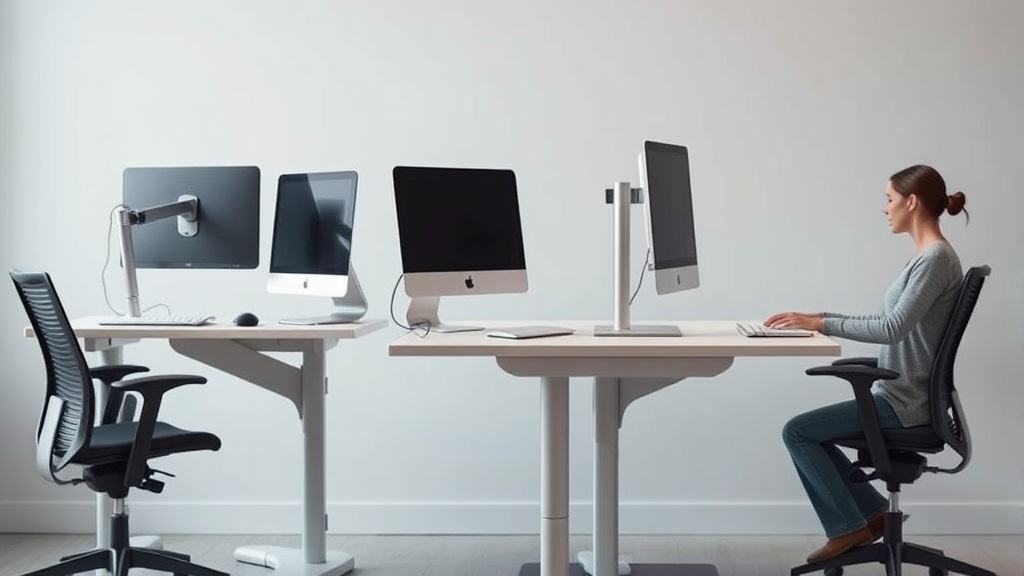
Standing desks are increasingly popular among desk workers looking to reduce sedentary time, but simply standing all day isn’t a complete solution. Without proper movement and exercise, standing can lead to fatigue, poor posture, and discomfort. To truly complement your standing desk routine, integrating targeted standing desk exercises is essential to maintain circulation, reduce muscle strain, and support ergonomic alignment through an 8-hour workday.
What Are Standing Desk Exercises?
Standing desk exercises are movements performed while at your standing workstation that promote blood flow, engage core muscles, support posture, and alleviate tension caused by prolonged standing or static postures. These exercises typically involve dynamic stretches, balance challenges, and low-impact strength work, all without requiring special equipment or leaving your workspace. Their core goal is to break up long periods of static positioning—whether sitting or standing—with short bursts of motion.
See also: 18. Anti-fatigue mats for standing desks ranked by back effect
Why You Need Them If You Use a Standing Desk
A standing desk alone won’t automatically solve all ergonomics issues. Prolonged standing can strain your calves, knees, lower back, and feet. Standing still engages fewer muscles than walking or moving around, leading to fatigue and discomfort. Moreover, improper fit of your standing desk setup—such as incorrect desk height, lack of lumbar support from a proper chair during sitting breaks, or absence of adjustable armrests—can exacerbate strain.
Incorporating standing desk exercises helps by:
- Increasing blood circulation to reduce numbness and swelling
- Activating postural muscles to prevent slouching
- Providing gentle mobilization to joints stiffened by static posture
- Reducing pressure build-up under your feet and other contact points
How Standing Desk Exercises Work
Their effectiveness hinges on brief, frequent movement intervals that interrupt static posture for 1-5 minutes roughly every 30-60 minutes of work. These micro-breaks differ from traditional exercise as they focus on mobility and ergonomics, rather than cardiovascular or strength training.
Think of standing desk exercises as a pressure-mapping tool made physical: instead of measuring pressure points under your seat or foot, you actively redistribute pressure by shifting your stance, stretching tight muscles, and engaging postural stabilizers.
Core Areas Targeted by Standing Desk Exercises
- Lower back and lumbar muscles: supports proper spine alignment and eases compression
- Calves and feet: prevents stiffness and plantar fasciitis risks
- Shoulders and arms: combats rounding and tension from typing or mouse use
- Core muscles: stabilizes torso to maintain neutral posture over extended hours
Practical Exercises to Integrate Into Your Standing Desk Routine
Here are practical, easy-to-do exercises that require no equipment and can easily fit into your workday:
| Exercise Name | Target Area | How to Do It | Frequency & Duration | Notes |
|---|---|---|---|---|
| Heel Raises | Calves, feet | Rise onto toes, hold for 2 seconds, lower slowly. | 2-3 sets of 15 reps every hour | Builds calf endurance and improves circulation. |
| Standing Cat-Cow | Back, spine mobility | Arch and round spine slowly, syncing with breath. | 1-2 minutes every 30-60 minutes | Keeps spine mobile, reduces lower back stiffness. |
| Arm Circles | Shoulders, arms | Extend arms and rotate in small to large circles. | 1 minute every hour | Relieves shoulder tension caused by typing. |
| Core Engaged March | Core, hips | Engage core, march in place lifting knees high. | 1-2 minutes every hour | Activates core muscles to stabilize posture. |
| Figure-Four Stretch | Hip/glute muscles | Cross one ankle over opposite knee, squat slightly. | Hold 20-30 seconds per side | Opens hips, reduces sitting-induced tightness. |
| Side Lateral Stretch | Obliques, sides | Reach overhead and to side, hold stretch. | Hold 20-30 seconds per side | Alleviates side torso tightness from leaning. |
Try to customize your routine by mixing in these stretches and movements at intervals that feel natural according to your work cadence. Setting a timer or using apps can aid consistent movement.
How to Match Exercises to Your Ergonomic Setup
Your standing desk setup heavily influences which exercises are most beneficial. Consider these 3 key aspects of ergonomic fit:
-
Desk Height & Adjustability: Your desk should keep elbows near 90 degrees and wrists neutral. If your desk is too high or low, shoulder and arm exercises are critical as compensatory strain increases.
-
Footwear & Anti-Fatigue Mat: Hard surfaces create more pressure on feet and lower legs—heel raises and calf stretches become essential. An anti-fatigue mat can help but doesn’t replace dynamic movement.
-
Chair Use During Sitting Breaks: Using a chair with sufficient lumbar support and adjustable armrests during sitting helps reduce muscle imbalances. Standing desk exercises focusing on hip and lower back mobility can counteract prolonged sitting stiffness.
How Standing Desk Exercises Differ From General Stretching or Gym Workouts
Unlike dedicated stretching or gym routines designed for maximal strength or flexibility gains, standing desk exercises are brief, targeted interventions. The goal isn’t to replace structured workouts but to maintain ergonomic health within the constraints of a workday.
Key Differences:
| Feature | Standing Desk Exercises | General Stretching Workouts | Gym/Strength Workouts |
|---|---|---|---|
| Duration | 1-5 minutes per interval | 10-30 minutes | 30-90 minutes |
| Frequency | Multiple times daily | Once or twice daily | Several times weekly |
| Objective | Improve micro-mobility, circulation | Increase flexibility, reduce tightness | Build strength, cardio fitness |
| Equipment Needed | None or minimal | None or minimal | Weights, machines, mats |
| Work Environment | At your desk space | Anywhere | Gym or dedicated space |
Common Pitfalls and How to Avoid Them
-
Ignoring Fit and Adjustability: Standing desk exercises won’t fully compensate if your desk height or monitor position is off. Make ergonomic adjustments first to maintain neutral posture.
-
Performing Exercises Infrequently: Benefits come from consistency. Prioritize micro-breaks over longer single sessions.
-
Holding Static Postures During Movement: Avoid “freezing” your body but instead focus on smooth, controlled movements that reduce unnecessary tension.
-
Overdoing: The goal is manageable, sustainable movement. Excessive or aggressive stretches can cause strain or injury.
Summary
Standing desk exercises are a practical solution to the discomfort and ergonomic challenges often overlooked by simply standing all day. Through targeted, regular movements that improve circulation, spinal mobility, and muscular engagement, you can transform your work routine from static to dynamic—without ever leaving your workstation.
By attentively pairing these exercises with a well-fitted ergonomic setup (correct desk height, proper chair support, and adjustable armrests), you provide your body with essential relief and support, ultimately boosting comfort and productivity over an 8-hour workday.
Frequently Asked Questions
Q: How often should I do standing desk exercises during the workday?
A: Aim for short movement breaks every 30 to 60 minutes, lasting 1 to 5 minutes each. Consistency is key over the long term.
Q: Can I do these exercises while on video calls?
A: Yes, many standing desk exercises are low profile and subtle. Movements like heel raises or gentle spinal mobilizations are usually acceptable when working on calls.
Q: Do I need special equipment to perform standing desk exercises?
A: No. Most exercises require just your body weight and minimal space, making them easy to integrate anywhere at your desk.
Related reading
- 18. Anti-fatigue mats for standing desks ranked by back effect
- 42. The research behind standing desks, actually summarized
- Benefits of Adjustable Standing Desks for Home Offices
- Using Standing Desks to Boost Calorie Burn and Energy Levels
- 34. Setting chair height when you cannot stand without your laptop
Our picks worth a closer look
- FlexiSpot E7 Pro Plus Electric Standing Desk 55x28Check on Amazon → — see current price and specs.
- 750lbs Big and Tall Office Chair with Wide Thick Seat Cushion,Ergonomic Mesh OffCheck on Amazon → — see current price and specs.
- Drafting Chair 400lbs Heavy Duty Tall Office Chair Big and Tall Ergonomic StandiCheck on Amazon → — see current price and specs.
- Drafting Chair, Tall Office Chair for Standing Desk, Ergonomic Standing Desk ChaCheck on Amazon → — see current price and specs.
- FLEXISPOT 32’ Standing Desk Converter, Space-Saving Desktop Riser for Home OfficCheck on Amazon → — see current price and specs.