
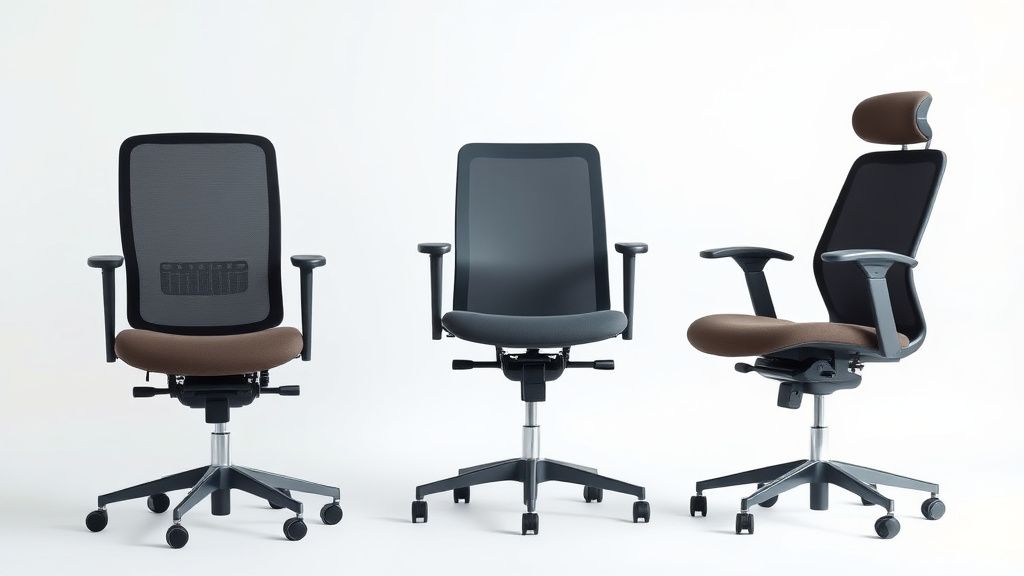
Why an Ergonomic Office Chair Matters
An ergonomic office chair is more than just a piece of furniture—it’s a tool to support your posture, reduce discomfort, and improve productivity. Poor seating can lead to back pain, neck strain, and even long-term musculoskeletal issues. Choosing the right ergonomic chair ensures that your body is properly aligned, reducing stress on your spine and joints while promoting comfort during long work hours.
Step 1: Assess Your Body Measurements
The first step in choosing the perfect ergonomic chair is understanding your body dimensions. Chairs are not one-size-fits-all, and selecting one that fits your height, weight, and body shape is crucial. Look for chairs with adjustable seat height, depth, and width to ensure a proper fit.
- Seat Height: Your feet should rest flat on the floor, with your knees at a 90-degree angle.
- Seat Depth: The seat should support your thighs without pressing against the back of your knees.
- Seat Width: Ensure the seat is wide enough to accommodate your hips comfortably.
Step 2: Prioritize Lumbar Support
Lumbar support is one of the most critical features of an ergonomic chair. It helps maintain the natural curve of your lower spine, preventing slouching and reducing lower back pain. Look for chairs with adjustable lumbar support that can be customized to fit the curve of your back.
- Built-in Lumbar Support: Some chairs have fixed lumbar pads that provide consistent support.
- Adjustable Lumbar Support: Chairs with adjustable lumbar pads or mechanisms allow you to fine-tune the support to your specific needs.
Step 3: Check the Backrest Design
The backrest should support your entire spine, from your lower back to your shoulders. A reclining backrest is ideal, as it allows you to lean back and relax while maintaining proper alignment. Look for chairs with adjustable backrest height and tilt to ensure optimal support.
- High Backrests: These provide full support for your entire back and are ideal for taller individuals.
- Mid-Back Backrests: These are suitable for shorter individuals or those who prefer more flexibility in movement.
Step 4: Evaluate Seat Padding and Material
Comfort is key when sitting for extended periods, so the seat padding and material matter. A chair with high-density foam provides better support and durability compared to thin or low-quality padding. Additionally, consider breathable materials like mesh or fabric to prevent overheating.
- Mesh Seats: These are lightweight, breathable, and ideal for warmer climates.
- Cushioned Seats: These offer plush comfort and are better for colder environments.
Step 5: Look for Adjustable Armrests
Armrests help reduce strain on your shoulders and neck by supporting your arms in a relaxed position. Look for chairs with adjustable armrests that can be customized to your height and desk setup.
- Height Adjustment: Allows you to align your arms with your desk height.
- Width Adjustment: Ensures your arms are comfortably spaced apart.
- Padded Armrests: Provide additional comfort for prolonged use.
Step 6: Consider Swivel and Casters
A chair with a 360-degree swivel base allows you to move freely without straining your body. Casters (wheels) should roll smoothly on your flooring type. For hard floors, choose soft rubber casters; for carpets, opt for hard plastic or dual-wheel casters.
Step 7: Test the Chair’s Tilt Mechanism
A tilt mechanism lets you recline and adjust the chair’s angle, which can reduce pressure on your spine and improve circulation. Look for chairs with a locking tilt mechanism or synchro-tilt feature that adjusts the seat and backrest simultaneously.
Step 8: Check for Weight Capacity and Durability
Ensure the chair can support your weight comfortably. Most ergonomic chairs have a weight capacity ranging from 250 to 400 pounds. Additionally, look for chairs made from durable materials like steel or aluminum frames, which offer long-lasting stability.
Step 9: Consider Additional Features
Some ergonomic chairs come with extra features that enhance comfort and functionality:
- Headrests: Provide support for your neck and head, especially if you frequently recline.
- Memory Foam Padding: Offers personalized comfort by molding to your body shape.
- Seat Sliders: Allow you to adjust the seat depth for a perfect fit.
What to Look for in an Ergonomic Chair
When shopping for an ergonomic chair, keep these key features in mind:
- Adjustability: Look for multiple adjustment options, including seat height, lumbar support, armrests, and backrest tilt.
- Support: Ensure the chair supports your spine, hips, and shoulders in a neutral position.
- Comfort: Choose a chair with high-quality padding and breathable materials.
- Mobility: Opt for a chair with smooth-rolling casters and a swivel base.
- Durability: Select a chair made from sturdy materials with a weight capacity that suits your needs.
Conclusion
Choosing the perfect ergonomic office chair requires careful consideration of your body measurements, work habits, and personal preferences. By prioritizing adjustability, support, and comfort, you can find a chair that promotes good posture and reduces discomfort during long workdays. Remember, investing in a high-quality ergonomic chair is an investment in your health and productivity. Take the time to test different options and choose one that fits your needs perfectly.
Our picks worth a closer look
- 750lbs Big and Tall Office Chair with Wide Thick Seat Cushion,Ergonomic Mesh OffCheck on Amazon → — see current price and specs.
- NOUHAUS +Posture Ergonomic Rolling Office ChairCheck on Amazon → — see current price and specs.
- Autonomous ErgoChair Pro Ergonomic Office ChairCheck on Amazon → — see current price and specs.
- Big and Tall Office Desk Chair 500lbs, Ergonomic Heavy Duty Mesh Desk Chair, ExeCheck on Amazon → — see current price and specs.
- Drafting Chair 400lbs Heavy Duty Tall Office Chair Big and Tall Ergonomic StandiCheck on Amazon → — see current price and specs.