
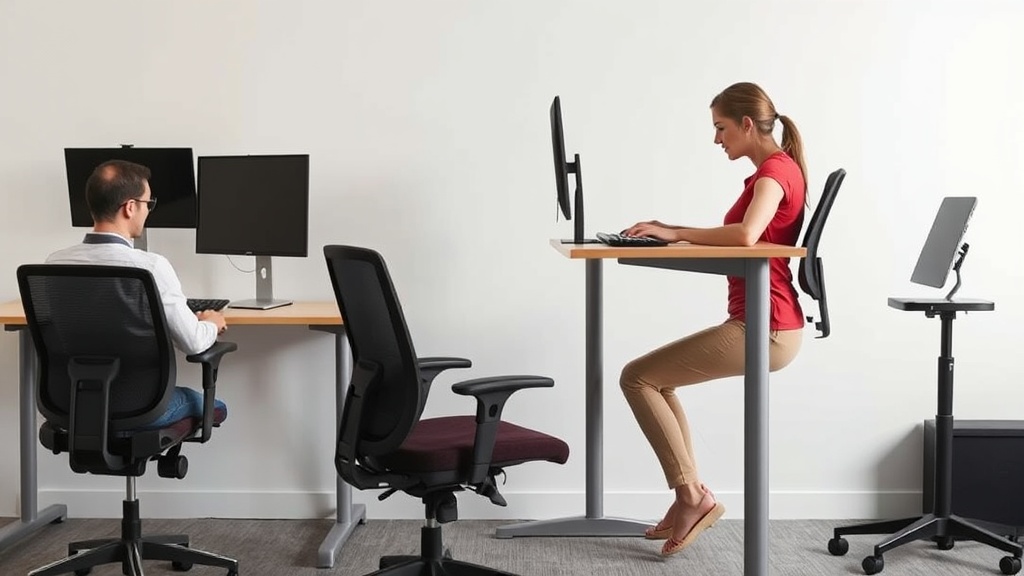
Choosing Chairwise Chairs to Prevent Neck and Shoulder Pain
If you spend long hours at a desk, neck and shoulder pain can quickly become a daily struggle that impacts your comfort, productivity, and overall health. Poorly designed chairs that don’t fit your body or support your posture well are often the root cause. Choosing an ergonomic chair designed to address these issues—like those offered by Chairwise—can make a significant difference. This article will guide you through the key features to look for in a Chairwise chair to help prevent neck and shoulder pain, making your all-day sitting experience healthier and more comfortable.
What Causes Neck and Shoulder Pain from Desk Chairs?
Neck and shoulder pain usually comes from prolonged static postures, forward head position, and inadequate upper back support. When a chair doesn’t promote a neutral spine alignment or fails to accommodate your body’s dimensions, the following problems occur:
- Forward head posture: A chair without proper headrest adjustment or upper back support forces your head forward, increasing neck strain.
- Elevated or unsupported shoulders: Incorrect armrest height or lack of arm support causes shoulder tension.
- Poor lumbar support: Without adequate lower back support, your upper back and neck have to compensate to hold proper posture.
- Inadequate seat depth: Seats that are too deep or shallow can cause slouching or pressure points, transmitting tension upward.
To address these issues, look for specific ergonomic features in Chairwise chairs designed with neck and shoulder health in mind.
See also: How Chairwise Chairs Help Alleviate Sciatica and Hip Pain
How Chairwise Chairs Help Prevent Neck and Shoulder Pain
Chairwise focuses on ergonomic precision, adjustability, and comfort grounded in real-world office use rather than marketing jargon. Here’s how their design approach tackles common pain triggers:
1. Adjustable Lumbar Support with Sufficient Range
Lumbar support acts as the foundation for the whole spine. Chairwise chairs provide adjustable lumbar supports that can be moved vertically and sometimes in depth, allowing you to position the support where your lumbar curve is most pronounced. This prevents slumping that contributes to upper back and neck strain.
2. 4D Armrests for Proper Shoulder Positioning
Chairwise chairs feature armrests with 4D adjustability—height, width, depth, and pivot. This lets you position your arms comfortably so your shoulders are relaxed, elbows close to the torso, and forearms supported. Inadequate adjustability often leads to shrugging or reaching, causing shoulder tension and neck stiffness.
3. Measured Seat Depth and Width
One of the most overlooked ergonomic features is seat depth. Chairs from Chairwise are designed with seat depth ranges of around 16 to 20 inches to fit various body sizes. If the seat is too deep, you’ll have a gap between the backrest and your lower back; too shallow and you risk pressure behind the knees which affects circulation and posture.
4. Headrest with Tilt and Height Adjustability
A properly positioned headrest supports the cervical spine, especially during relaxed sitting or leaning back. Chairwise chairs offer headrests that can tilt and adjust vertically, preventing forward head posture and the neck fatigue that comes with it.
5. Pressure-Mapped Cushioning
To optimize comfort for 8+ hour sessions, Chairwise uses pressure-mapping data to design cushions that evenly distribute weight and relieve pressure points. This ensures long-term use without numbness or localized discomfort that can cascade into muscle pain in the neck and shoulders.
How to Choose the Right Chairwise Chair for Your Needs
Here is a step-by-step approach to selecting a Chairwise chair that helps prevent neck and shoulder pain:
Step 1: Measure Yourself for Fit
- Seat Depth: Measure the length from the back of your buttocks to the back of your knees. The ideal seat depth lets you sit fully back with about 1-2 inches of clearance behind the knees.
- Upper Back and Neck Height: Measure from the seat surface to the base of your head to determine if the headrest and backrest height ranges accommodate you.
- Arm Span and Width: Measure your shoulder width and preferred armrest height to ensure armrests can be adjusted correctly.
Step 2: Prioritize Adjustable Lumbar and Armrests
Neck and shoulder pain benefit most from targeted lumbar support and relaxed shoulder positioning. Confirm the chair has vertical lumbar height adjustability and 4D arms. Armrest padding adds comfortable support as well.
Step 3: Test Headrest Comfort and Adjustability
If you tend to lean back or work with a headset, choose a chair with a headrest that you can align with your neck curvature. Check for tilt options in addition to height.
Step 4: Consider Cushion Firmness and Pressure Relief
Go for chairs featuring pressure-mapped cushioning or memory foam blend padding designed for long-term comfort without causing pressure build-up that negatively affects posture.
Step 5: Evaluate Build Quality and Durability
High durability ensures the chair maintains its ergonomic properties over years of use without sagging, which once again can promote poor posture and neck strain.
Comparison: Key Features of Chairwise Seating for Neck and Shoulder Pain
| Feature | Importance for Neck & Shoulder Health | Typical Chairwise Offering | Ideal Adjustment Range/Specification |
|---|---|---|---|
| Lumbar Support | Crucial for spine alignment and reducing compensatory strain | Adjustable height and depth lumbar support | Height: 4-6 inches range; Depth: adjustable |
| Armrests | Prevent shoulder shrugging and elevate comfort | 4D adjustable armrests (height, width, depth, pivot) | Height: 6-10 in; Width: adjustable; Pivot ±15° |
| Seat Depth | Ensures full back support without knee pressure | Measured, adjustable seat depth 16-20 inches | Should match user’s thigh length minus 1-2 in |
| Headrest | Supports cervical spine to prevent forward head posture | Height and tilt adjustable headrest | Height: 4-7 inches; Tilt: 15° - 30° |
| Cushioning (Pressure-Mapped) | Distributes weight evenly to avoid pressure points | High-density foam with pressure mapping input | Medium-firm with contouring for even pressure |
| Build Quality | Maintains ergonomic integrity over time | Sturdy frames, high-quality materials | Tested to hold 250-300 lbs without sag |
Common Pitfalls to Avoid When Buying Chairs for Neck and Shoulder Pain
Even chairs with great ergonomic specs won’t help if you:
- Skip trying the chair before extended use: Marketing photos and specs don’t tell you about how the chair feels after 4-8 hours in one position.
- Ignore personal body dimensions: One-size-fits-all chairs rarely fit well; lack of proper seat depth or armrest height leads to discomfort.
- Forget to adjust the chair: Most people leave the chair in default settings, not realizing that adjustability is only useful if you customize it properly.
- Disregard your workstation setup: Seating is just one part—the desk height, monitor position, and keyboard setup also affect neck and shoulder strain.
- Overlook pressure relief: Chairs without well-designed cushioning cause discomfort that will prompt you to move into less optimal postures.
Summary
Neck and shoulder pain from desk work can erode well-being and productivity, but carefully choosing a Chairwise chair with targeted ergonomic features can mitigate this significantly. Focus on chairs with adjustable lumbar support, 4D armrests, measured seat depth, and headrests to promote healthy posture for long hours of sitting. Pressure-mapped cushioning and durable build quality add to long-term comfort and performance. Lastly, personal fitting and adjustment are key to unlocking the benefits and preventing persistent pain.
Frequently Asked Questions
Q: How important is armrest adjustability for preventing shoulder pain?
A: Very important. Adjustable armrests allow you to keep your shoulders relaxed and elbows close to the body, reducing muscle tension in your neck and shoulders.
Q: Can a headrest really reduce neck strain during desk work?
A: Yes. A proper headrest supports the cervical spine and encourages a neutral neck posture, which helps avoid forward head posture and associated muscle fatigue.
Q: How do I know if a chair’s seat depth fits me correctly?
A: Sit fully back with your back against the backrest. You should have about 1-2 inches of space between the seat edge and the back of your knees. This positioning helps maintain proper posture and circulation.
Related reading
- Ergonomic Chair Adjustments for Users of Different Heights
- Ergonomic Office Chairs Designed for Long Hours at Work
- Customizing Chairwise Chairs for Personalized Comfort and Support
- 3. Secretlab Titan Evo vs Herman Miller Embody for tall users
- 37. Lower back pain at your desk: the three fixes that work
Our picks worth a closer look
- Ergonomic Office Chair for Long Hours Sitting – Back & Neck Pain Relief, AdjustaCheck on Amazon → — see current price and specs.
- FEI FAH Electric Medibalm Net 2.45 oz (70g) Ointments, Creams & Oils,Muscular AcCheck on Amazon → — see current price and specs.
- 750lbs Big and Tall Office Chair with Wide Thick Seat Cushion,Ergonomic Mesh OffCheck on Amazon → — see current price and specs.
- NOUHAUS +Posture Ergonomic Rolling Office ChairCheck on Amazon → — see current price and specs.
- Autonomous ErgoChair Pro Ergonomic Office ChairCheck on Amazon → — see current price and specs.