
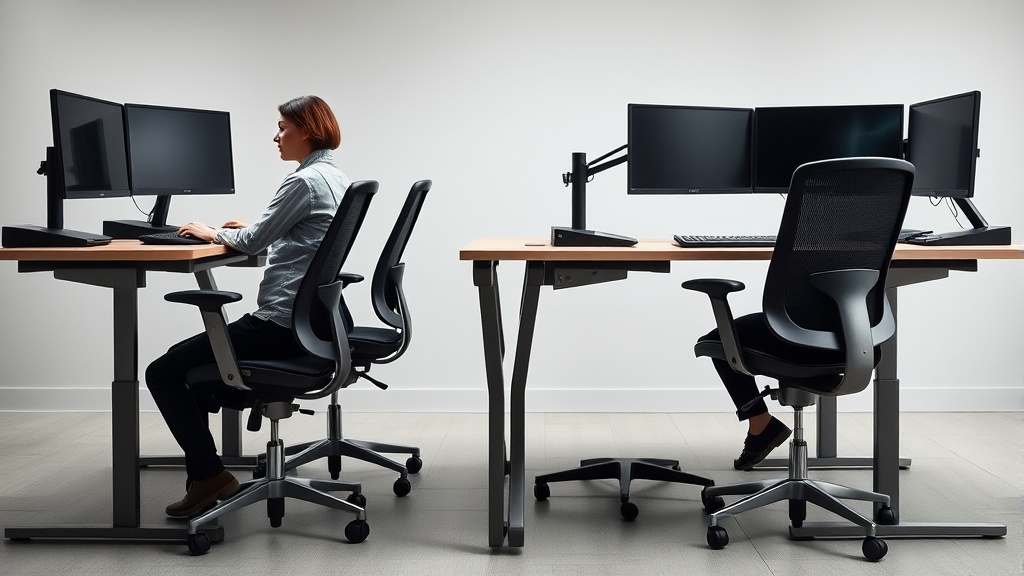
Why the Aeron Is Wrong for Most People Who Bought It
If you bought an Aeron chair expecting an all-day ergonomic solution that adjusts perfectly to your body, only to find it uncomfortable or fatiguing after a few hours, you’re not alone. Despite its iconic status and heavy marketing as one of the best chairs for desk workers, the Aeron often falls short in key ergonomic features that matter during an 8-hour or longer workday. This article explains why the Aeron might be a mismatch for many users and helps you understand what to look for instead.
What the Aeron Is
The Aeron chair, introduced over two decades ago, revolutionized office seating with its patented mesh fabric and modern design. It quickly became a cultural icon, synonymous with premium office comfort and innovation. The chair’s emphasis was on breathability, sleek aesthetics, and a one-piece molded seat and backrest.
How the Aeron Works (and Why That Matters)
The Aeron relies heavily on its Pellicle mesh suspension system, which distributes pressure across the back and seat rather than concentrating it in one spot. Its tilt mechanism provides recline support but uses preset tension and incremented tilt angles without lumbar height adjustability. Armrests generally offer vertical and lateral movement but not full 4D adjustability.
These design choices make the Aeron visually appealing and adequate as a short-term or showpiece chair, but they inevitably fall short in three crucial ergonomic pillars for long-term seated comfort:
- Measured Fit: The fixed seat pan depth and lack of lumbar height adjustment limit custom fit. Seat depth should fit the user’s thighs without pressure behind the knees.
- Pressure Mapping: While mesh distributes pressure, it doesn’t provide targeted support where users need it most, like the lumbar spine and seat base.
- Adjustability for Long Hours: Without fully adjustable lumbar and armrests, the chair can cause strain or awkward posture after prolonged use.
When the Aeron Might Make Sense
The Aeron can be suitable if you:
- Use it intermittently (less than 4 hours/session).
- Have a standardized office environment where a uniform, visually impactful chair is valued more than precise fit.
- Are comfortable within its limited adjustment range.
- Prioritize breathability and minimal upholstery for aesthetic or climate reasons.
If your work typically involves sustained sitting beyond half a workday, or you need precise ergonomic adjustments, the Aeron is less likely to meet your needs.
Common Pitfalls of the Aeron for Daily Desk Workers
Many users report the following issues with their Aeron chairs after purchase:
- Seat Depth Too Short or Long: The Aeron’s seat depth is fixed to standard sizes (small, medium, large), but many users find it either places pressure behind their knees or leaves too much gap, impacting circulation or causing slouching.
- Insufficient Lumbar Support Range: The lumbar pad is limited to a height range and firmness that doesn’t adjust enough. Taller or shorter users struggle to position it properly.
- Armrests With Limited Adjustment: The Aeron armrests have vertical and lateral adjustments but lack forward/backward movement and rotation, making it tough to find comfortable typing or mouse-posture.
- Firm Pellicle Mesh Pressure Points: The mesh, while breathable, can feel firm and unforgiving, especially on the ischial tuberosities (sit bones) during long sessions without good cushioning.
- Complex Tilt Mechanics: Some find the tilt and recline lock system unintuitive, encouraging static postures instead of dynamic movement.
What Makes an Ergonomic Chair Better for 8+ Hours?
When choosing an ergonomic chair, especially for a full workday, the following features should be non-negotiable:
| Feature | Why It Matters | Ideal Specs | Aeron Status |
|---|---|---|---|
| Seat Depth (Measured Fit) | Prevents knee pressure and supports thighs | Adjustable by several inches, with no gap behind knees | Fixed by chair size (S, M, L); not adjustable |
| Lumbar Support Adjustability | Targets lower back curve at correct height | Height and firmness adjustable over wide range | Limited height and firmness adjustability |
| Armrest 4D Travel | Supports forearms and shoulders dynamically | Height, width, depth (front-back), rotation adjustable | Vertical and lateral only; no depth or rotation |
| Pressure Mapping | Identifies pressure points to reduce fatigue | Design informed by pressure mapping studies; cushioned where needed | Breathable mesh but minimal cushioning around sit bones |
| Tilt & Recline Mechanics | Encourages micro-movements throughout the day | Easy to adjust, multiple lock-in angles, tension customization | Tilt tension adjustable but less intuitive |
How to Know If an Aeron Fits You—and What to Do If It Doesn’t
If you already own an Aeron or are considering it, here’s how you can gauge if it’s the right chair for your work style:
- Measure Your Seat Depth Needs: Sit on a chair where you can slide a fist’s width between the back of your knees and the pan edge. If your Aeron feels like it pushes into the back of your knees or leaves a large gap, it may not be right.
- Check Lumbar Positioning: Use a lumbar pillow or support to compare how much adjustment you need beyond the Aeron’s built-in pad.
- Assess Armrest Comfort: Place your arms on the armrests. If you find yourself excessively leaning forward, putting your arms in awkward positions, or tensing your shoulders, you need 4D adjustability.
- Evaluate Pressure and Comfort Over Time: If your buttocks or lower back go numb, or you feel excessive pressure after 2-3 hours, the mesh or general fit is failing you.
- Test Tilt/ Recline Mechanics: Try gentle, frequent recline during long sessions. If the mechanism feels stiff or difficult to unlock, it might discourage movement.
If several points above are a concern, investigate chairs with deeper seat depth adjustment, more versatile lumbar systems, and 4D armrests.
Alternatives to Consider Instead of the Aeron
- Chairs with independently adjustable seat depth to customize your thigh support.
- Chairs featuring lumbar supports with adjustable height and firmness to meet your exact spinal curve.
- Chairs with armrests that move in all four dimensions (up/down, side-to-side, forward/backward, and rotate) to maintain a relaxed shoulder and forearm posture.
- Ergonomic designs validated by pressure mapping, highlighting support where users spend the most time and pressure.
Summary and Takeaways
The Aeron chair revolutionized office seating but has design limitations that make it a poor fit for many people working 8 hours or more daily. Its fixed seat depth, limited lumbar adjustment, and constrained armrests often lead to discomfort, fatigue, and poor posture over long sessions. When buying an ergonomic chair, choose one that prioritizes measured fit, thorough pressure mapping, and adjustability that supports dynamic movement throughout a long day at your desk.
Frequently Asked Questions
Q: Can adding cushions or aftermarket lumbar supports fix Aeron’s fit issues?
A: While cushions can help, they often don’t fully compensate for fixed seat depth or restricted adjustability. They might improve comfort but can create new pressure points or reduce the mesh’s breathability.
Q: Is the lack of seat depth adjustment the biggest flaw in the Aeron?
A: For many users, yes. Without precise seat depth, the chair won’t support your thighs properly, leading to circulation issues or slouching that causes fatigue.
Q: Does Aeron’s mesh make it better for long hours in hot environments?
A: The mesh offers good breathability, but breathability alone can’t fix poor ergonomic fit. If the chair causes pressure points or incorrect posture, comfort will erode regardless of airflow.
If you want a chair that supports you from the first sit to quit time, a measured, adjustable fit matters more than brand reputation or style. Understanding exactly why chairs like the Aeron succeed or fail will help you avoid buyer’s remorse and invest in your comfort wisely.
Related reading
- Ergonomic Chair Showdown: Herman Miller Aeron vs. Steelcase Leap vs. Budget Alternatives
- Ergonomic Chair Showdown: Herman Miller Aeron vs. Steelcase Leap vs. Budget Alternatives
- Best Office Chairs for Tall People (6”2”+): Seat Depth, Lumbar Support
- The Ultimate Ergonomic Chair Showdown: Herman Miller vs. Steelcase vs. Budget Alternatives
- 37. Lower back pain at your desk: the three fixes that work
Our picks worth a closer look
- 750lbs Big and Tall Office Chair with Wide Thick Seat Cushion,Ergonomic Mesh OffCheck on Amazon → — see current price and specs.
- Massage Office Chair with Foot Rest,6-Point Vibration & Heat Executive Office ChCheck on Amazon → — see current price and specs.
- Massage Office Chair with Foot Rest,6 Points Vibration&Heat Executive Office ChaCheck on Amazon → — see current price and specs.
- NOUHAUS +Posture Ergonomic Rolling Office ChairCheck on Amazon → — see current price and specs.
- Autonomous ErgoChair Pro Ergonomic Office ChairCheck on Amazon → — see current price and specs.