
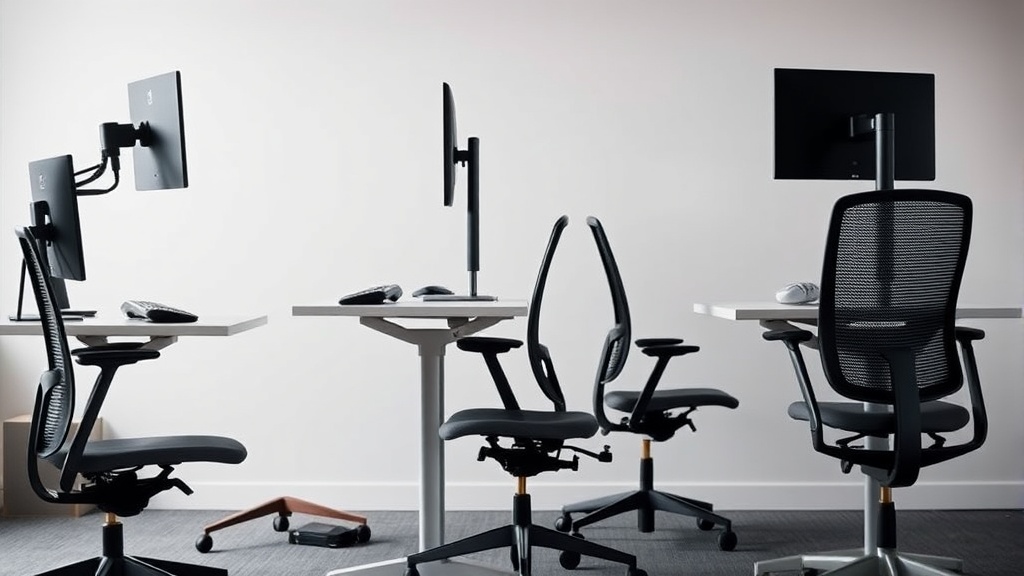
When you spend your workday anchored to a desk chair, it’s crucial that the chair supports your body well enough to keep you comfortable and healthy. But chairs vary wildly in price. You might wonder: When is it worth investing $1,000 in an office chair, and when is a $200 model sufficient? This article guides you through what to expect at different price points, focusing on factors like fit (seat depth, lumbar adjustability, armrest range), pressure distribution, and real-world comfort after a full workday—not just shiny marketing copy.
What It Is: Understanding How Pricing Reflects Ergonomic Features
Chairs priced around $200 tend to be entry-level or mid-level models aimed at basic comfort and adjustability. They usually provide some height adjustment, basic lumbar support, and limited armrest movement. In contrast, $1,000+ chairs offer highly customizable ergonomic features designed to support a wide range of body types and sitting postures for extended periods.
Key ergonomic adjustments to look for:
- Seat Depth Adjustment: Allows you to change the distance from the backrest to the front edge of the seat, crucial for thigh support without pressure behind the knees.
- Lumbar Adjustability Range: Effective support needs to adapt to the natural curve of your lower back with adjustments in height and firmness.
- Armrest 4D Travel: Moving armrests in four directions (height, width, depth, and pivot) that help maintain relaxed shoulder posture over different tasks, like typing or mouse use.
See also: 7. The best budget ergonomic chair under 250 dollars across six body types
How It Works: The Science Behind Comfort and Ergonomics
High-end chairs invest in advanced design and materials that provide better pressure distribution and postural support for extended use. Pressure-mapping studies—which visualize how weight distributes across the seat and backrest—show that expensive chairs reduce peak pressure points around the tailbone and thighs, limiting discomfort and circulation issues.
Cheaper chairs often use less sophisticated foam or mesh and have fewer adjustments, so they might create pressure concentrations or force you into awkward postures over time. The immediate feeling might be okay, but after 4–8 hours of sitting, this can translate into discomfort, fatigue, or even musculoskeletal symptoms.
When To Spend $1,000 on a Chair
Investing in a $1,000+ ergonomic chair makes sense if:
-
You Sit 6 or More Hours Per Workday: Prolonged sitting necessitates a chair that adapts finely to your body, preventing discomfort and chronic problems.
-
You Have Specific Fit Needs or Body Proportions: If you are particularly tall, short, or have unusual body proportions, the advanced adjustments (e.g., seat depth of 14” to 20”, lumbar height from mid-lumbar to upper lumbar) in pricier chairs are crucial.
-
You Experience Back or Shoulder Pain from Sitting: Better lumbar support and armrest positioning can alleviate pain caused or aggravated by ill-fitted chairs.
-
You Value Gradual Learning and Fine-Tuning: High-end chairs often require a bit of setup—but the ability to experiment with adjustments lets you “dial in” comfort that lasts all day.
When $200 is Enough
Spending $200 or so can be enough if:
-
You Sit Only Short Stints (1–3 Hours per Session): Basic support typically holds up well for shorter, intermittent work sessions.
-
You Have a Budget Constraint: A $200 chair often outperforms poor-quality chairs you might otherwise settle for, ensuring reasonable daily comfort.
-
Your Workspace is Shared or Temporary: If you don’t have a dedicated workspace, a moderately priced chair that performs decently for various users might be preferable.
-
You Already Have Good Posture Habits and Regular Movement: If you take breaks frequently, stretch, and change posture often, a simpler chair can be adequate.
Price Point Comparison Table
| Feature / Consideration | $200 Chair | $1,000+ Chair | Typical Scenario |
|---|---|---|---|
| Seat Depth Adjustment | Rare or limited (~1-2 inches) | Common, up to 6 inches coverage | Helps thigh clearance for different leg lengths |
| Lumbar Support Range | Basic fixed or minimal adjustment | Adjustable height and firmness | Key for back pain prevention and comfort |
| Armrest Adjustability | Height only or fixed | 4D (height, width, depth, pivot) | Allows relaxed shoulders, diverse tasks |
| Pressure Distribution | Average, foam or mesh-based | Pressure mapped, zoned cushioning | Less pressure build-up, better circulation |
| Build Quality and Durability | Plastic parts, budget foam | High-quality materials, replaceable parts | Longer lifespan and sustained performance |
| Warranty and Service | Typically 1 year | Often 5+ years with service support | Peace of mind, cost-effective long term |
| Comfort after 8 Hours | Often problematic, pressure points | Maintains comfort, supports posture | Critical for health and productivity |
| Price | $150-$250 | $900-$1,500+ | Budget vs. investment-grade |
Common Pitfalls to Avoid Regardless of Price
- Ignoring Proper Fit: A $1,000 chair that doesn’t fit your body (too shallow, no lumbar adjustability for your height) can feel worse than a $200 chair that fits reasonably well.
- Buying Based on Looks or Marketing: Don’t be swayed by trendy styles or vague ergonomic claims without test sitting or reading detailed reviews about adjustment range and durability.
- Neglecting Movement: Even the best chair won’t prevent discomfort if you sit motionless for hours. Taking breaks and changing posture throughout the day is essential.
- Overlooking Armrests or Lumbar Support Quality: Limited adjustment often means compromised comfort in shoulders and lower back, key areas for most desk workers.
- Settling for a Cheap Chair in a High-Use Scenario: If you plan to use a chair intensely every day, a low-cost chair may wear out quickly or cause pain and productivity loss.
Summary
Spending around $200 on a chair can be a reasonable choice if your sitting sessions are short, your budget tight, or your posture and movements compensate for less refined ergonomics. However, if your work hours clock in above 6 per day, if you have chronic back or shoulder issues, or you want an investment that provides adjustable, pressure-mapped comfort with durable materials, then a $1,000+ ergonomic chair typically pays off in comfort, health, and productivity.
Frequently Asked Questions
Q: Can a $200 chair really support good posture?
A: Yes, especially for short sessions or occasional use. However, it may lack fine adjustments needed for long-day comfort and precise fit.
Q: What is ‘4D armrest adjustability,’ and why does it matter?
A: It means armrests can move up/down, side-to-side, forward/back, and pivot. This versatility helps keep shoulders relaxed and can reduce strain during varied tasks.
Q: How important is seat depth adjustment?
A: Very important for thigh support and preventing pressure behind the knees. Wrong seat depth can cause discomfort or circulation issues especially over many hours of sitting.
Invest wisely by balancing how long you sit, your body type, and the chair’s adjustable features. Sitting well is not a luxury but a workplace necessity.
Related reading
- 7. The best budget ergonomic chair under 250 dollars across six body types
- 2. The best ergonomic chair under 500 dollars reviewed across 5 body types
- Ergonomic Office Chairs Designed for Long Hours at Work
- 5. HON Ignition 2.0: the 300 dollar chair that beats chairs at three times
- Ergonomic Chair Features to Look for in 2024
Our picks worth a closer look
- 750lbs Big and Tall Office Chair with Wide Thick Seat Cushion,Ergonomic Mesh OffCheck on Amazon → — see current price and specs.
- NOUHAUS +Posture Ergonomic Rolling Office ChairCheck on Amazon → — see current price and specs.
- Autonomous ErgoChair Pro Ergonomic Office ChairCheck on Amazon → — see current price and specs.
- Big and Tall Office Desk Chair 500lbs, Ergonomic Heavy Duty Mesh Desk Chair, ExeCheck on Amazon → — see current price and specs.
- Ergonomic Office Chair, High Back Desk Chair with Flip-up Arms, 300 LBS Mesh ComCheck on Amazon → — see current price and specs.