
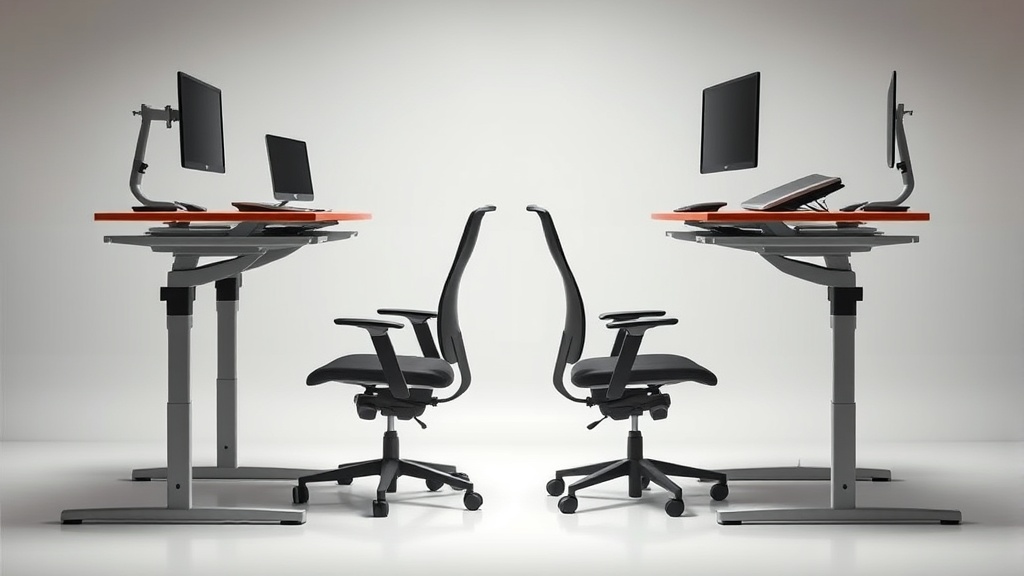
Electric vs Manual Crank Desks: The Real Cost Difference
If you’re a desk worker considering a sit-stand desk, one key decision is choosing between an electric height-adjustable desk or a manual crank model. Both promise ergonomic benefits, but your choice impacts not only your comfort and productivity but also your wallet—both upfront and over time. The real cost difference extends beyond sticker price to factors like durability, ease of use, and long-term fatigue. This article breaks down how electric and manual crank desks compare in those areas, helping you make a practical, informed decision that fits your daily workflow and budget.
What Are Electric and Manual Crank Desks?
Electric desks use motors activated by buttons to raise or lower the desktop surface. These motors offer smooth, effortless adjustments that typically support multiple user height presets. Manual crank desks use a hand crank to physically lift or lower the desk by turning gears connected to the frame. They lack motors and electronic parts, making them simpler in design but requiring physical effort for each adjustment.
Both systems replace traditional fixed-height desks, allowing users to alternate between sitting and standing to reduce sedentary time and improve posture. But their mechanisms and user experience differ significantly.
See also: 20. Ergotron LX vs Amazon Basics monitor arm: is the 5x price real?
How Electric Desks Work
Electric desks contain one or two electric motors housed in the frame, connected to a control panel usually featuring up/down buttons and sometimes programmable height presets. Pressing a button activates the motors, which raise or lower the desk smoothly with little user effort. The motors draw power from a wall outlet.
Electric desks may include features like:
- Memory presets: Save preferred heights for sitting and standing.
- Anti-collision systems: Automatically stop if the desk meets resistance.
- Quiet operation: Low noise motors minimize distraction.
How Manual Crank Desks Work
Manual crank desks rely on mechanical gear systems linked to a crank handle. The user rotates the handle to wind or unwind the gears, which slowly lifts or lowers the desktop. No electricity is involved, so these desks can be used anywhere without needing an outlet.
Manual crank desks typically have simpler frames and fewer moving parts, reducing potential maintenance but requiring physical effort every time you want to adjust your desk height.
Comparing the Real Costs of Electric vs Manual Crank Desks
Price is the most obvious difference when choosing between electric and manual crank desks, but the total cost of ownership involves several other considerations:
| Feature/Cost Factor | Electric Desk | Manual Crank Desk | Notes/Considerations |
|---|---|---|---|
| Upfront Cost | Higher (typically 30-50% more expensive) | Lower | Electric models can start around $400-$600, manual crank often $250-$400 for comparable size/quality. |
| Ease of Use | Very easy; push-button height adjustments | Requires physical effort and time | Electric desks save effort and encourage frequent adjustments; crank desks need more commitment. |
| Adjustment Speed | Fast, smooth | Slower; depends on user’s crank speed | Frequent adjustment is easier with electric. |
| Durability and Maintenance | More complex; motors and electronics can fail | Mechanically simpler; fewer parts to fail | Electric motors may need repair or replacement over time; manual crank desks rarely need service. |
| Lifespan | Usually 5-10 years with proper care | Can last 10+ years if well-built and maintained | Quality and build impact lifespan for both types. |
| Noise Level | Quiet motor noise | Silent except physical effort noise | Electric motors generally quiet but audible; crank desks are mechanically silent. |
| Energy Consumption | Uses power when adjusting; standby power usage | Zero energy use | Minimal impact but factor if sustainability is a priority. |
| Work Productivity Impact | Encourages frequent adjustment, better ergonomics | Less convenient to adjust; fewer position changes possible | The ease of electric desks can encourage healthy postural changes. |
| Transport and Setup | Heavier, requires outlets | Lighter; no power needed | Manual desks can be more adaptable to various work locations. |
| Price-Performance Balance | Higher initial cost but potential better ergonomic compliance | Lower cost but may deter regular use | Evaluate how much you’ll adjust your desk based on your work habits. |
When to Choose an Electric Desk
- You value frequent height adjustments throughout your workday for comfort and to maintain energy.
- You want preset height buttons for quick, consistent transitions.
- You have mobility limitations or prefer effortless control.
- Your workspace has easy and reliable access to outlets.
- You anticipate heavy daily use, justifying the higher upfront cost for smoother operation and ergonomic benefits.
Electric desks promote better ergonomic compliance by making it simple to change positions with minimal distraction or fatigue. The quiet motors and programmable heights speed transitions, encouraging you to stand more often.
When to Choose a Manual Crank Desk
- You work in a location without easy power access or want a portable solution.
- Your budget is tight but you still want a sit-stand setup.
- You don’t need to adjust desk height multiple times per day, or you prefer a stable setup with occasional repositioning.
- You prioritize mechanical simplicity and durability.
- You don’t mind spending a little physical effort to change your desk height.
Manual crank desks provide a budget-friendly alternative with less maintenance complexity, suitable for users who adjust their desk height less frequently or in limited locations.
Common Pitfalls and Considerations
- Overestimating your adjustment frequency: If you buy an electric desk but rarely change height, you may not recoup your investment ergonomically.
- Ignoring fit and ergonomic features: Both types vary widely in desktop size, height range, stability, and adjustment increments. A great motor or gear system won’t compensate for an awkward fit.
- Underestimating maintenance: Electric desks might incur repair costs after a few years (motor replacement, control panel issues), while crank desks usually only need occasional lubrication.
- Weight capacity mismatches: Both desk types vary in how much weight they support (monitors, accessories). Check specs carefully.
- Noise impact: Though electric motors are quiet, some models have noticeable hum that can distract in quiet environments.
Summary: The Real Cost Difference
Choosing between an electric and manual crank sit-stand desk comes down to balancing upfront cost, ergonomic use habits, durability expectations, and workspace setup:
| Aspect | Electric Desk | Manual Crank Desk |
|---|---|---|
| Cost | Higher upfront, potential added repair costs | Lower upfront, minimal ongoing cost |
| Ergonomics | Easy height changes encourage better posture | Effort to adjust may reduce usage |
| Durability | Motors can fail but generally reliable | Fewer failure points if quality materials |
| Convenience | Push-button precision and memory presets | Simple mechanism, no power needed |
| Ideal User | Frequent adjuster, mobility-limited, office setting | Budget-conscious, occasional adjuster, flexible location |
Your best choice depends on how much you plan to switch between sitting and standing, your budget, desire for convenience, and workspace constraints. If you plan to stand often and want smooth, effortless transitions, the electric desk’s premium cost may be worth it. If you want a reliable, no-frills solution and don’t mind the occasional crank, manual desks provide solid value and durability.
Frequently Asked Questions
Q: Are electric desks significantly better for ergonomics than manual crank desks?
A: Electric desks make it easier to change positions frequently, which can improve ergonomic outcomes. Manual crank desks are ergonomically effective too but might discourage frequent adjustments due to effort required.
Q: Do electric desks consume a lot of power?
A: No. Electric desks only use power when adjusting height and have minimal standby energy consumption. Energy costs are negligible compared to most office equipment.
Q: What maintenance do manual crank desks require?
A: Manual desks need occasional lubrication of gears and bolts to prevent rust or stiffness. Otherwise, they have fewer components that require maintenance compared to electric desks.
Related reading
- 20. Ergotron LX vs Amazon Basics monitor arm: is the 5x price real?
- Benefits of Sit-Stand Desks for Home Office Health
- Benefits of Adjustable Standing Desks for Home Offices
- Choosing Adjustable Standing Desks for Varied Home Workstyles
- Standing Desks and Their Role in Combating Sedentary Lifestyle
Our picks worth a closer look
- FlexiSpot E7 Pro Plus Electric Standing Desk 55x28Check on Amazon → — see current price and specs.
- Bestand Real Fan White Noise Machine Sleep Sound Machine with Smart Mode, Timer Check on Amazon → — see current price and specs.
- FEI FAH Electric Medibalm Net 2.45 oz (70g) Ointments, Creams & Oils,Muscular AcCheck on Amazon → — see current price and specs.
- Huuger Electric Standing Desk with Power Outlets and USB-C Port, 47 X 24 Inch HeCheck on Amazon → — see current price and specs.
- WOOLALA Heated Wrist Brace with Massager USB Portable Electric Heating Pad for CCheck on Amazon → — see current price and specs.